6 Best Lab Automation Software Solutions for Laboratories in 2026
Table of Contents
- Compare the Best 6 Lab Automation Software Solutions: At a Glance
- 1. Onymos DocKnow: Best for Clinical & Diagnostic Lab Automation (Intake-to-Billing)
- 2. Momentum (Thermo Fisher Scientific): Best for High-Throughput Pharma Automation
- 3. Green Button Go Suite (Biosero): Best for Flexible Standalone Automation
- 4. Scispot: Best for Cloud-Based Lab Automation with API-First Integration
- 5. newLab: Best for Enterprise Lab Resource and Workflow Management
- 6. Benchling: Best for Scientific Workflow Automation and ELN Integration
- Why Onymos DocKnow Is the Lab Automation Layer Clinical Labs Are Missing
- Ready to Automate Your Lab Workflows? See How Onymos Can Help
Need a custom demo?
Use your own workflow and see where DocKnow can reduce manual work.
Get your demoKey Takeaways
- Onymos DocKnow is the best lab automation software for clinical and diagnostic laboratories that need to automate document-driven workflows with a No-Data Architecture that keeps all patient data inside their own environment.
- Momentum is the strongest choice for pharmaceutical and drug discovery labs running complex, high-throughput automation systems with scheduler-driven workflows.
- Green Button Go suits labs that need flexible, modular, standalone automation for liquid handling, hit picking, and compound management.
- newLab, Scispot, and Benchling are best for R&D teams and enterprise research labs that need cloud-based laboratory workflow automation.
Your lab runs on data, but if the workflows that generate that data are still manual, you’re creating operational risk. Incomplete sample intake, error-prone data entry, and disconnected laboratory instruments directly affect your reimbursement, CLIA/CAP audit-readiness, and capacity to scale.
The right lab automation software eliminates those failure points, connecting specimen intake, workflow automation, instrument control, and data acquisition into a single, reliable pipeline.
From AI-powered intake solutions to robotics-driven automation systems for HTS/HCS screening and drug discovery, here are the tools worth knowing to match your workflow.
Compare the Best 6 Lab Automation Software Solutions: At a Glance
| Platform | Best For | Standout Feature |
|---|---|---|
| Onymos DocKnow | Clinical & diagnostic labs; document-driven lab automation from intake through billing | SmartSync AI reconciliation + No-Data Architecture |
| Momentum (Thermo Fisher) | High-throughput pharmaceutical and drug discovery labs | Momentum Integration Software for complex scheduler-driven automation |
| Green Button Go (Biosero) | Labs needing flexible, scheduler-driven liquid handling automation | Green Button Go Suite for standalone automation and connected instruments |
| Scispot | Modern biotech labs needing cloud-based lab automation with REST API | API integrations + Python SDK for digital workcell orchestration |
| newLab | Enterprise R&D and pharma/biotech labs requiring centralized operations | Centralized equipment and resource management |
| Benchling | R&D and scientific workflow teams needing ELN + automation integration | Digital ecosystem for scientific workflows and data acquisition |
Running a clinical or diagnostic lab?
See how Onymos DocKnow automates your intake-to-billing workflow → contact us!
1. Onymos DocKnow: Best for Clinical & Diagnostic Lab Automation (Intake-to-Billing)
Onymos DocKnow is an intelligent intake layer. As a lab automation software and HIPAA-compliant document management software, it handles the document side of diagnostic and clinical laboratory operations:
- Capturing test requisition forms
- Validating insurance and patient data
- Reconciling errors before they reach billing systems
- Routing clean, structured data to downstream platforms via API
For labs where the documentation chain is the revenue chain, this is the automation that actually matters. DocKnow, powered by Nucleus (Onymos’s underlying AI system), transforms manual, spreadsheet-driven intake workflows into connected data pipelines.
The lab automation market is projected to reach $9 billion by 2030. This is exactly where DocKnow operates.
Why intake automation = revenue protection
Timely filing limits of 90-180 days mean that errors at intake (missing insurance details, mismatched physician identifiers, incomplete diagnostic codes) expire as denied claims before billing teams can chase them down. DocKnow catches those errors at the source.
Onymos DocKnow Key Features
Here’s what makes DocKnow stand out.
- AI-Powered Document Capture and Intake Automation
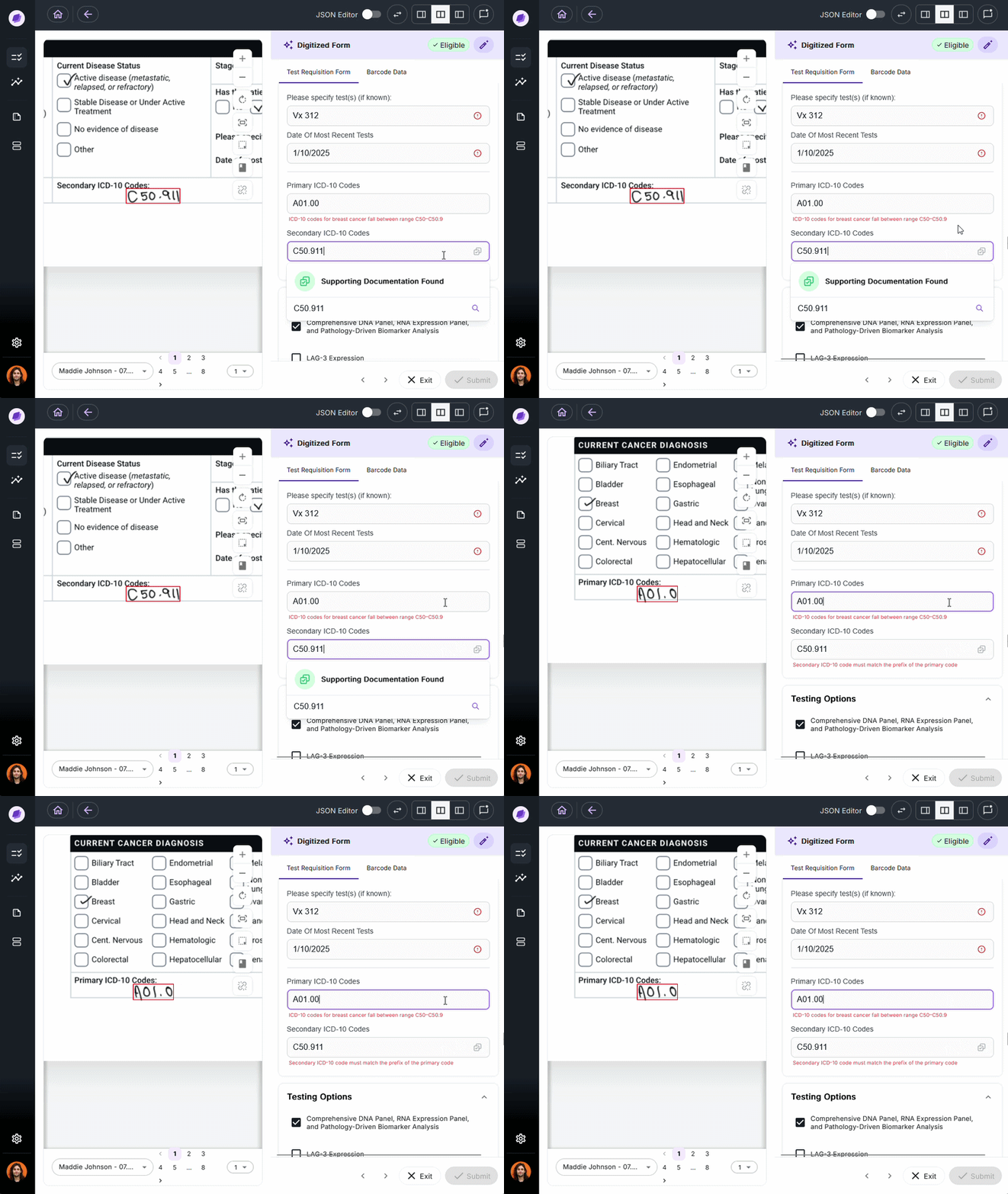
DocKnow captures TRFs, insurance cards, and clinical documentation from email, fax, cloud storage, or connected systems. It automatically extracts and validates key data using NLP and machine learning. Conflicting or incomplete fields are flagged before anything moves downstream.
- SmartSync AI Reconciliation
SmartSync is Onymos’s proprietary AI data reconciliation engine. It cross-references extracted values against connected systems and supporting documents, detecting mismatches before data moves downstream. Missing patient insurance details or mismatched physician identifiers get caught at intake.
- Zero Vendor Exposure
All patient records and extracted data remain exclusively within the customer’s own environment with Onymos’s No-Data Architecture. Onymos is also SOC 2 Type II and HIPAA compliant.
- Billing and Reimbursement Automation
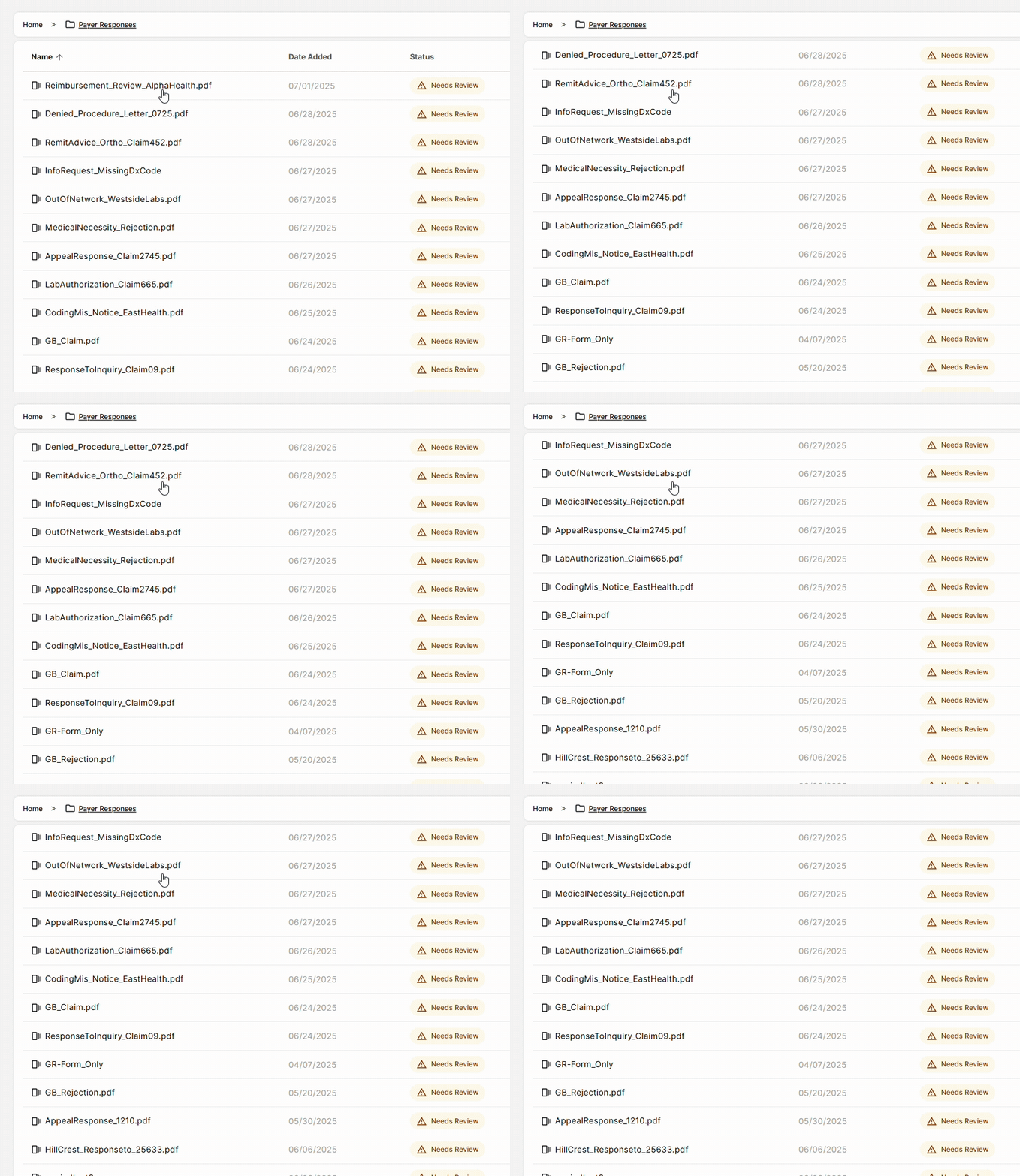
DocKnow also automates many billing-side laboratory tasks commonly associated with revenue cycle management software: running eligibility checks, processing EOBs and claims, supporting appeal letter generation when denials occur, and maintaining a field-level audit trail across every document interaction.
Onymos DocKnow Pricing
Onymos DocKnow follows a custom pricing model with modular add-ons available. This means you can pick and choose the features you want, allowing you to scale with specimen volume instead.
Where Onymos DocKnow Shines
- Purpose-built for diagnostic and clinical lab intake: Onymos is not adapted from a generic platform
- SmartSync catches intake errors: This happens before they become billing failures
- No-Data Architecture: Eliminates third-party data exposure
- Eligibility checks and appeal letter generation: These functions are built into the billing module
- CAP/CLIA aligned: SOC 2 certified and built for HIPAA-sensitive workflows
Where Onymos DocKnow Falls Short
- Not suited for general pharma automation: Primarily serves diagnostic and clinical labs
- Not a robotics or instrument integration platform: Focused on document-driven workflows
Onymos DocKnow Customer Reviews
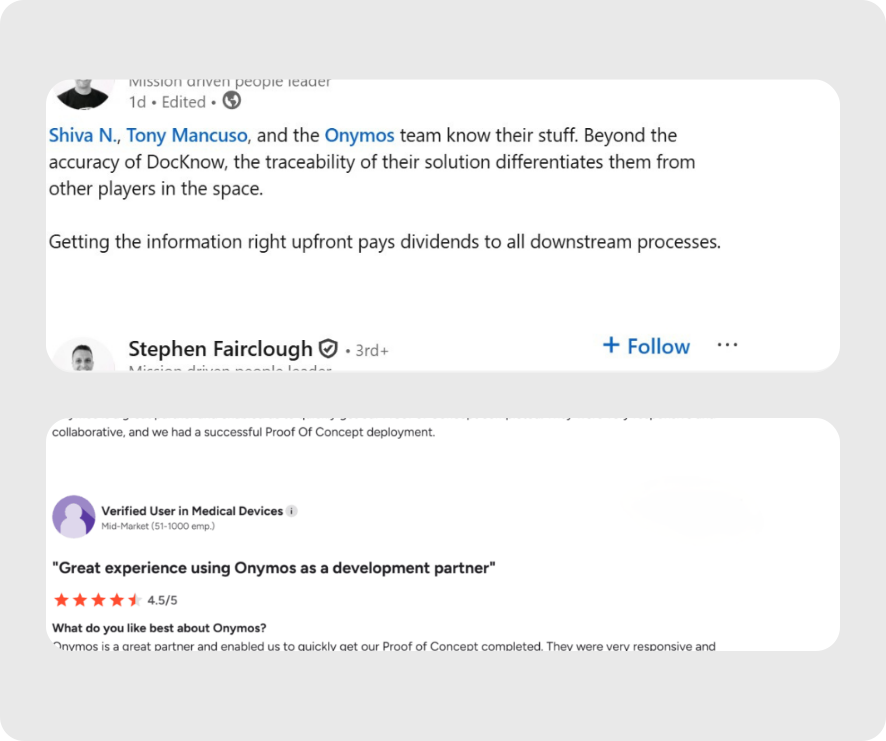
An enterprise user in the mid-market medical niche reports, “We’ve used Onymos solutions and services for two major projects. It has been an incredibly positive experience in every aspect. Team members are extremely knowledgeable, reliable, articulate, and accommodating.”
→ Read more: Onymos’s customer success stories.
Who Onymos DocKnow is Best For
- Clinical and diagnostic labs: That are automating specimen intake, TRF processing, and billing data pipelines at scale with a healthcare document management system like DocKnow
- RCM teams and lab directors: Those responsible for clean data flow from specimen intake through reimbursement
- Labs scaling specimen volume: Labs that are performing more tests annually and can no longer absorb manual intake workflows
Say goodbye to intake errors today.
Looking for a smarter alternative to traditional LIMS software that might not have the functionality you really need? See Onymos DocKnow in action → contact us!
2. Momentum (Thermo Fisher Scientific): Best for High-Throughput Pharma Automation
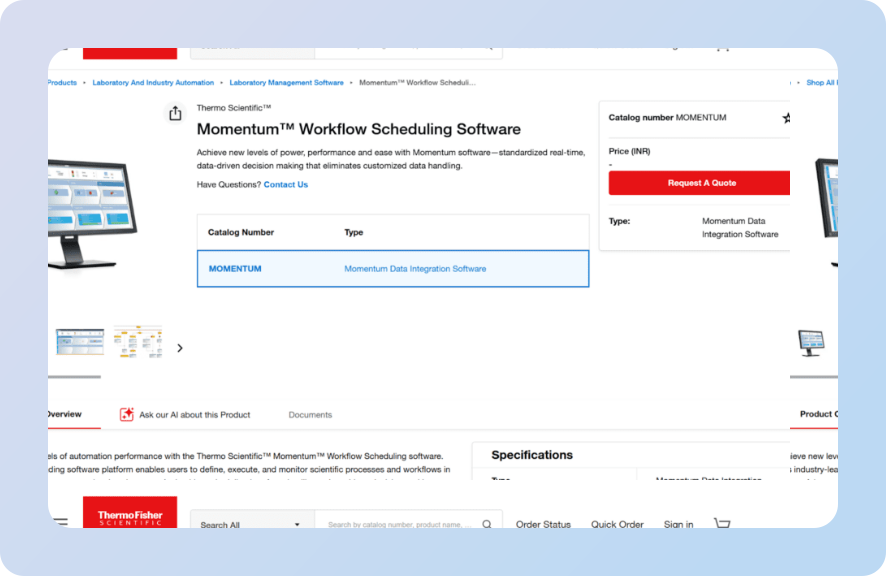
Momentum is a mature, scheduler-driven lab automation control system built for high-throughput pharmaceutical and drug discovery labs.
It coordinates complex multi-instrument automation systems and is widely used in HTS/HCS screening, mass spectrometry, and functional genomics labs where automation systems must run continuously with precise instrument coordination.
Key Features
- Scheduler-Driven Automation Control: Real-time control of complex, multi-instrument lab automation systems with automated instrument loading and error handling
- High-Throughput Workflow Support: Built for HTS/HCS screening, mass spectrometry workflows, and compound management
- Bridge and Maglev Transport Integration: For automated sample preparation and plate movement between connected instruments
Pricing
Momentum Integration Software follows a custom pricing model with enterprise licensing available.
Where Momentum Shines
- Best-in-class scheduler: Especially for complex multi-instrument automation systems
- HTS/HCS screening environments: Strong in drug discovery
- Supports lights-off wet labs: Providing automated error handling
Where Momentum Falls Short
- Heavy implementation: Not suited for smaller or fast-deploying labs
- Not designed for document-driven intake: Or billing workflows
- Requires significant automation expertise: Challenge for configuration and maintenance
Customer Reviews
There are limited reviews available on the Momentum software, but general feedback notes that it’s “Best for easy use and it may be implemented for any complex procedure. Real time scanning is possible.”
Who Momentum Is Best For
- Large pharma and drug discovery labs: running high-throughput automation systems that require complex instrument scheduling
- HTS/HCS screening labs: with multi-instrument configurations requiring real-time control and automated error handling
Explore how AI lab tools are transforming laboratory workflows
3. Green Button Go Suite (Biosero): Best for Flexible Standalone Automation
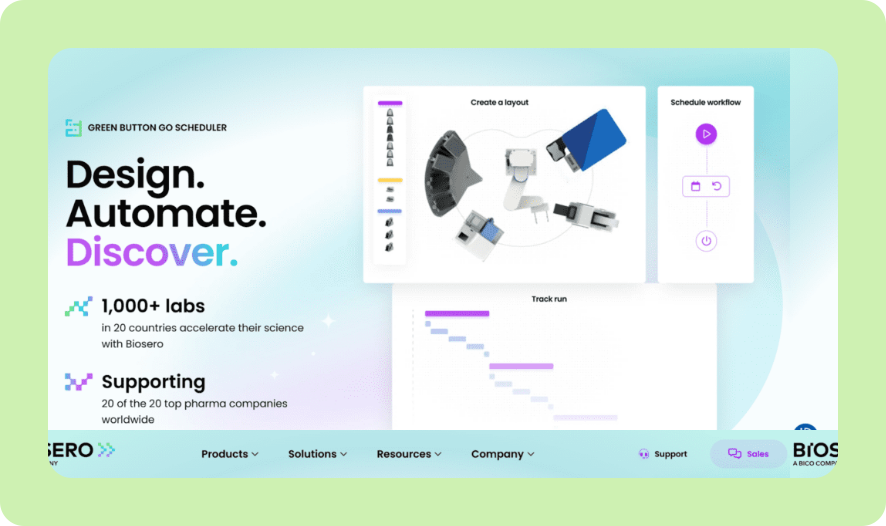
Green Button Go is Biosero’s scheduler-driven automation software designed for labs that need flexible, modular standalone automation without full end-to-end automation infrastructure.
It’s a strong choice for labs that want to automate specific steps without replacing their entire lab setup.
Key Features
- Standalone Automation and Workflow Stations: Modular approach supporting standalone automation at individual workflow stations
- Liquid Handling Integration: Native support for liquid handling systems, single-cell dispensing, and compound management workflows with configurable instrument loading
- Scalable to High-Density Configurations: Green Button Go Suite scales from simple standalone automation to high-density configurations across multiple connected instruments
Pricing
Green Button Go offers a custom pricing model.
Where Green Button Shines
- Flexible, modular standalone automation: Ideal for incremental deployment
- Strong support: Especially for liquid handling and single-cell dispensing
- Scalable: From simple workflow stations to high-density configurations
Where Green Button Falls Short
- Less suitable for some use cases: Such as fully integrated, end-to-end automation orchestration
- Requires automation expertise: Especially for complex multi-instrument deployments
Customer Reviews
Green Button Go has limited reviews, but user feedback generally notes that the software is very flexible and has an intuitive UI.
Who Green Button Is Best For
- Labs scaling automation incrementally: starting with standalone automation at specific workflow stations before investing in full end-to-end systems
- Drug discovery and compound management labs: needing liquid handling and hit picking automation without full enterprise infrastructure
4. Scispot: Best for Cloud-Based Lab Automation with API-First Integration
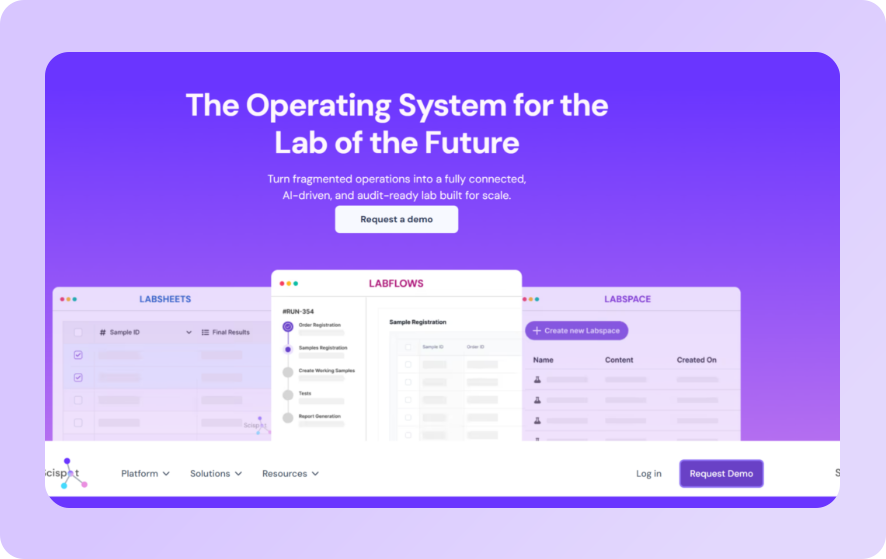
Scispot is a modern, cloud-based laboratory automation software platform built for biotech and genomics labs that need a flexible digital ecosystem connecting their lab’s software, instruments, and data pipelines.
Key Features
- REST API + Python SDK: Full API integrations and Python SDK for building custom digital workcell orchestration and connecting Scispot to existing lab’s software and B2B workflows
- No-Code Workflow Automation: Visual workflow builder for designing laboratory automation workflows without engineering resources
- AI Tools and Predictive Maintenance: Built-in AI systems for data analysis, Predictive Maintenance alerts, and Levey-Jennings Chart generation for QC monitoring
Pricing
Scispot follows a custom pricing model for all its tiers.
Where Scispot Shines
- API-first architecture: With REST API and Python SDK for custom integrations
- Strong no-code workflow builder: For fast deployment
- Built-in AI tools: Including Predictive Maintenance and QC monitoring
Where Scispot Falls Short
- Newer platform: Less proven at large enterprise or regulated pharma scale
- Limited regulatory validation modules: Compared to pharma-specific platforms focused on laboratory compliance and validated workflows
Customer Reviews
Rajan B. praises, “Scispot helped my team centralize all our animal research data from live animal data (including randomization, clinical observations, feed intake, etc.), clinical chemistry, clinical pathology, histology, anatomic pathology and all associated metadata into one single platform.”
Soumith P. notes, “I would like to see more scientific out of the box analytics.”
Who Scispot Is Best For
- High-growth biotech and genomics labs building a connected digital ecosystem with API integrations and cloud-based workflow automation
- Labs with technical teams that want Python SDK access and REST API connectivity to build custom lab automation control system integrations
In enterprise environments, iPaaS platforms such as MuleSoft competitors like Boomi and Workato are frequently considered alongside API-driven integration models like this.
5. newLab: Best for Enterprise Lab Resource and Workflow Management
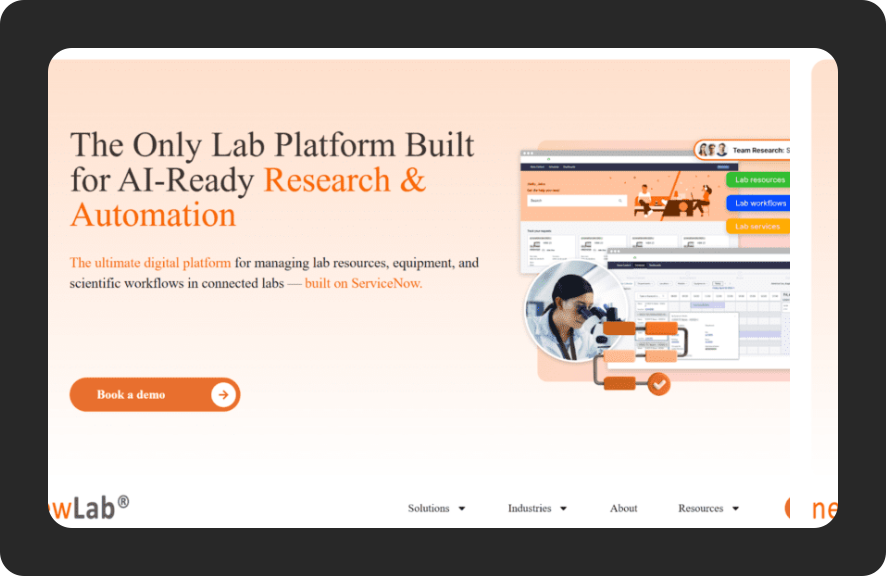
newLab is a smart lab software platform designed for R&D organizations that need to centralize and automate lab operations across teams, sites, and research programs.
Unlike instrument-focused automation platforms, it focuses on the operational layer: equipment and resource management, scheduling and booking, service request workflows, and AI-ready lab infrastructure.
Key Features
- Equipment and Resource Management: Centralized tracking and management of lab equipment and resources across sites
- Scheduling and Booking: Automated scheduling and booking workflows for instruments and lab resources, reducing bottlenecks and eliminating double-bookings at enterprise scale
- Service Requests and Workflows: Structured service request management that connects scientists to Lab Operations teams with standardized digital workflows
Pricing
newLab follows a custom pricing model.
Where newLab Shines
- Purpose-built for enterprise R&D operations: Not adapted from a generic project management tool
- Benefits of centralization: Centralizes equipment management, scheduling, and service workflows
- Scales cleanly: Across multi-site lab operations and large research teams
Where newLab Falls Short
- Not a robotics or instrument control platform: Won’t replace Momentum or Cellario for HTS automation
- Not designed for clinical or diagnostic lab intake: Offers limited features in this regard
Customer Reviews
Due to newLab being relatively recent to the market, there are limited reviews available.
Who newLab Is Best For
- Enterprise R&D and pharma/biotech labs that need a centralized operational platform
- Lab Operations and IT leaders looking to standardize how work is requested, tracked, and delivered at scale
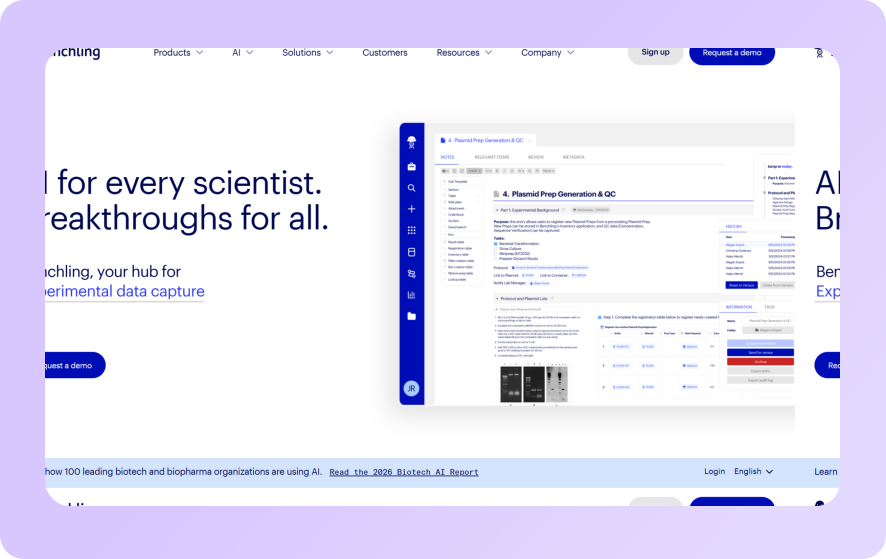
6. Benchling: Best for Scientific Workflow Automation and ELN Integration
Key Features
- ELN + LIMS + Workflow Automation: Unified digital ecosystem combining electronic lab notebook, LIMS software, and workflow automation for scientific workflows
- Data Acquisition and High-Throughput Data: Structured data acquisition pipelines for high-throughput data from connected instruments, with integration into downstream analysis tools
- API Integrations + Cloud Platform: Cloud platform with strong API integrations for connecting Benchling to third-party lab instruments, automation systems, and B2B workflows
Pricing
Academic and small teams get a free plan with Benchling. Growth and Enterprise firms need to contact the sales team for a custom quote.
Where Benchling Shines
- Free tier available: For academic and smaller teams which is a rare offering
- Comprehensive offerings: ELN + LIMS + workflow automation in a single cloud platform
- Good API integrations: Strong digital ecosystem for scientific workflows
Where Benchling Falls Short
- Less suitable: For high-throughput pharmaceutical automation systems
- Not built for diagnostic lab accessioning: Or clinical workflows
- Limited enterprise pricing options: Scales up quickly to being more expensive
Customer Reviews
Ciaran L. says, “Setting up new entity schemas and templates for users is super fast, thanks largely to the easy to use interface, and the great selection of built-in entities to choose from (dropdowns, dates, Sequence data etc).”
Christoph G. notes, “It is a bit of a learning curve, but that is unavoidable for this much of an all-round solution.”
Who Benchling Is Best For
- Life sciences R&D and biotech teams needing unified scientific workflow automation with ELN, LIMS, and API integrations
- Academic and startup labs that want a free entry point and modern cloud-based lab automation software
Why Onymos DocKnow Is the Lab Automation Layer Clinical Labs Are Missing
Did you know that 68% of lab errors occur before a specimen ever reaches the LIMS, and only 19% of complex intake forms arrive with complete data?
This is a classic intake automation problem, and it’s where intelligent document processing software like DocKnow operates best.
1. Onymos Validates Data at the Source, Before It Can Do Damage
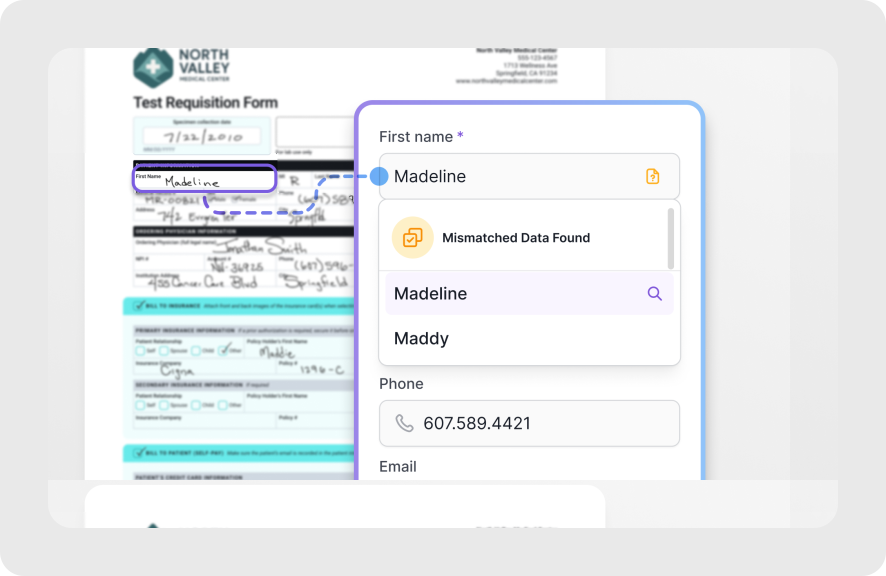
The most expensive errors in diagnostic lab operations are those that appear after testing is already complete, in the form of denied claims.
DocKnow’s SmartSync AI reconciliation engine addresses this with real-time extraction and cross-validation: the moment a TRF, insurance card, or clinical document enters your workflow, DocKnow parses it for context and relationships specific to precision medicine.
That’s automation at the point where it actually protects revenue and compliance.
2. Onymos Keeps Your Data Inside Your Infrastructure
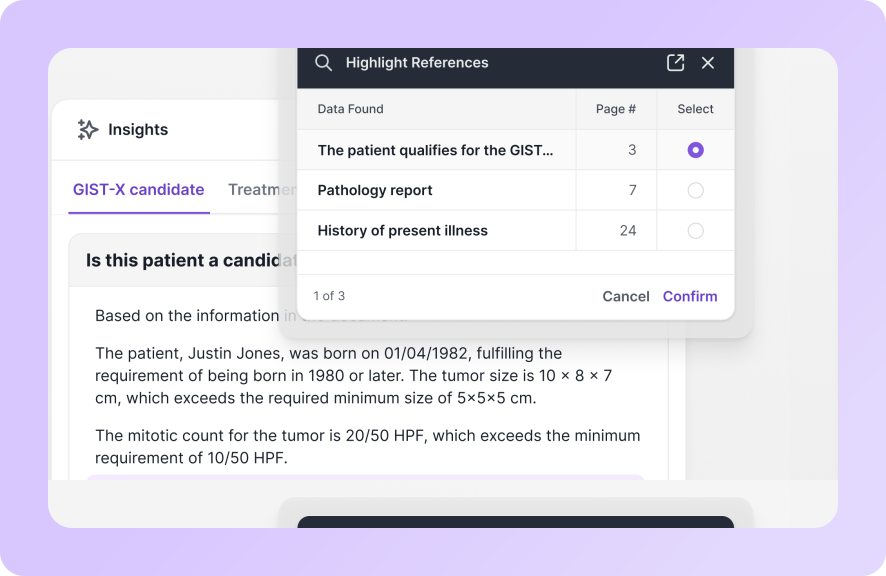
DocKnow is deployed inside your own infrastructure, which means every TRF, medical record, and extracted data point stays within your environment from the moment it enters the system.
Every action is governed by configurable business rules and logged in an immutable changelog, keeping your team audit-ready without manual overhead.
3. Onymos Connects Directly to the Systems You Already Use
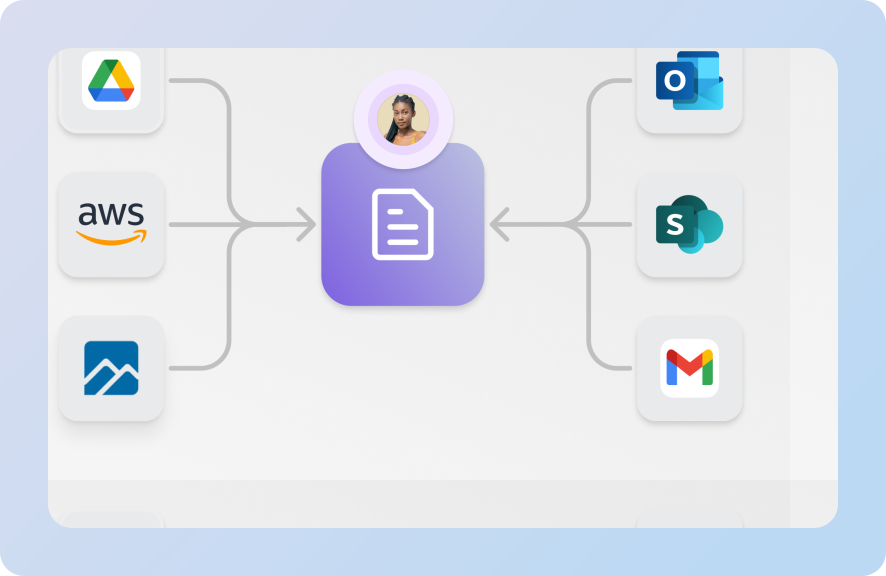
DocKnows ensures that your systems only ever receive clean, structured data.
It ingests documents from any source (direct upload, email, cloud storage, fax, or integrated systems) and outputs validated, structured data via API directly into your LIMS, billing platform, EHR, or analytics tools.
The Nucleus AI engine handles the extraction, reconciliation, and routing. Your downstream systems just receive better data.
Ready to Automate Your Lab Workflows? See How Onymos Can Help
Most lab workflow automation software solves the physical side of the problem: moving samples, scheduling instruments, and running assays. Very few address the documentation and billing side, where the majority of clinical and diagnostic labs are actually losing time and revenue.
If your lab is processing test requisition forms manually, chasing missing insurance details, or watching claims get denied because of data errors that could have been caught at intake, that’s a lab automation problem we have the solution for.
See Onymos DocKnow in action today!


Connect with our team to explore how Onymos solutions can maximize efficiency, minimize costs, and drive real, scalable growth.
Schedule your demoWe know healthcare data
AI in the lab. Workflow automation at scale. Digital front doors for hospitals and clinics. Healthcare and life sciences are changing fast. Are you ready? Subscribe to our blog for:
- Trends in healthcare tech
- Research and analysis
- Customer stories and more