
Get data right the first time. Every time.
Ensure clean, complete, and verifiable data from the first touch. DocKnow helps your team eliminate errors, reduce rework, and stay in compliance with CLIA and CAP without slowing down.
- Of lab errors occur before your LIMS
- 68%
- Of specimen errors are avoidable
- 73%
- Of complex forms have incomplete data
- 81%
/ The challenge /
Errors start before your LIS.
Most lab errors happen before a specimen is ever tested, in the forms, labels, and handoffs your QA team is left to catch later. Every miss means rework, corrective action, and audit exposure.
-
01
Errors enter at intake
68% of lab errors occur before your LIMS, in the TRFs, labels, and documents that arrive with each specimen.
-
02
Most are avoidable
73% of specimen errors are preventable, but manual checks can’t catch them consistently at volume.
-
03
Gaps become audit findings
81% of complex forms arrive incomplete, leaving holes in the records CLIA and CAP inspectors review.
/ How it works /
Make QA and compliance a competitive advantage.
- 01
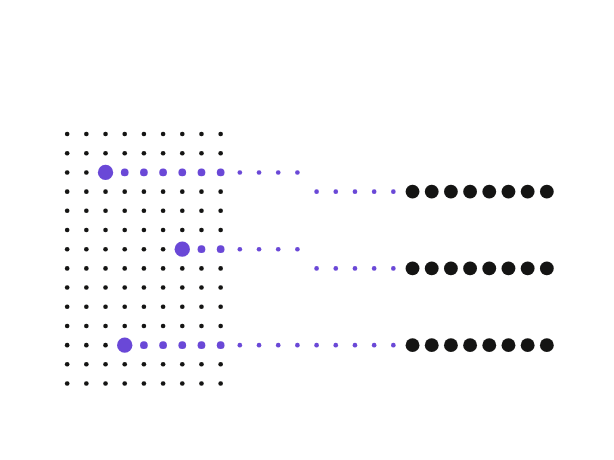
Validate at intake
DocKnow validates, enriches, and reconciles information starting at intake, generating a complete data lineage with source-linked validation.
- 02
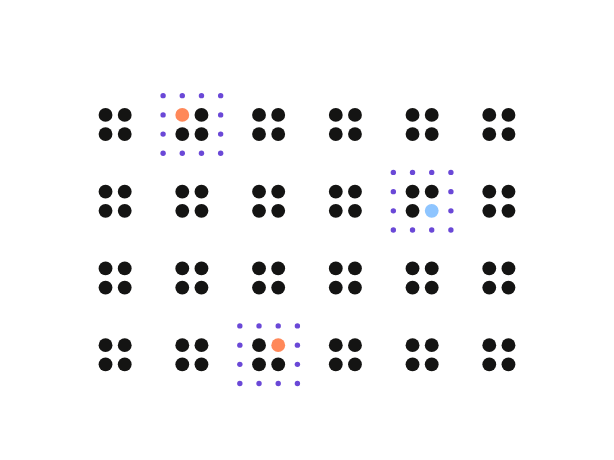
Detect exceptions
Automatically detect missing, inconsistent, or non-compliant data and flag exceptions for QA review, before they impact downstream systems.
- 03
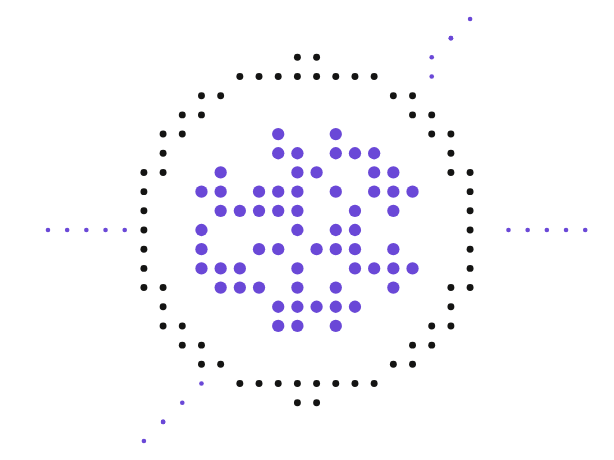
Deploy privately
DocKnow operates entirely within your infrastructure, eliminating vendor data exposure, simplifying compliance, and enabling more secure reporting.
- 04
Customize rules
Use configurable business rules to customize validation based on your lab’s specific requirements, from test orders to billing data.
Beyond the accuracy of DocKnow, the traceability of their solution differentiates them from other players in the space.
/ Capabilities /
Fix less. Prove more.
Get source-linked, audit-ready data from the first touch.
-
Data integrity
Validate information against source documents and existing records to maintain accuracy and consistency.
-
Exception detection
Automatically identify missing, inconsistent, or noncompliant information before it creates downstream issues.
-
End-to-end traceability
Track data from its original source through validation, transformation, and downstream systems.
-
Configurable compliance rules
Enforce organization-specific requirements and validation policies consistently across workflows.
-
Audit-ready records
Maintain detailed, attributable logs of changes, corrections, and verification activity.
-
Private deployment
Keep sensitive data within your own infrastructure to maintain control over access and processing.
/ FAQ /
Questions, answered.
Still have questions?
Talk to our team 01 What information does DocKnow capture in its audit logs?
Audits
DocKnow maintains a detailed audit trail that captures original sources, metadata, automated processing actions, and corrections made by users. This allows your team to trace changes throughout a workflow and understand how information reached its final state.
02 What happens when DocKnow identifies a potential compliance issue?
Issues
It depends on the issue. Simple formatting problems can be corrected automatically, using configurable business rules.
When information is missing or questionable, DocKnow can cross-reference supporting documents and connected systems to identify potential solutions, leaving final decisions to your team.
From there, results can be routed according to your laboratory’s workflows. For example, corrected information might be sent to billing, while the original discrepancy is flagged for client services to investigate. This allows laboratories to resolve issues without losing visibility into the errors that caused them.
03 What types of documents can DocKnow process?
Documents
DocKnow processes test requisition forms (TRFs), medical records, lab reports, insurance cards, and other clinical documents. They can be typed or handwritten, single pages or multi-page packets, and arrive by upload, fax, email, SFTP, or API.
04 What makes DocKnow “lab-native”?
Lab-native
Unlike general-purpose document processing platforms, DocKnow is purpose-built for the complexity of laboratory operations.
At its core is Synapse, our domain-specific intelligence layer, developed through experience processing more than one million completed forms across 500+ variations. Synapse augments AI-generated results with laboratory-specific knowledge and programmatic logic to help ensure extracted information is ready for downstream workflows.
That specialization extends to built-in capabilities, including integrations with ICD and CPT code sets for interpreting and validating laboratory-related information.
05 Where is DocKnow deployed?
Deployment
Inside your infrastructure, either in your cloud VPC or on-premises. Documents and patient data never leave your environment, so you stay in control of security and access.
For labs that want or need it, Onymos also offers secure hosting.
06 How does DocKnow connect to our other systems?
Integrations
Through APIs, HL7 / FHIR interfaces, and SFTP. Validated, structured data is written back to your LIS, EHR, and billing systems automatically.
07 How does pricing for DocKnow work?
Pricing
DocKnow pricing is tailored to your processing volume, workflow complexity, and deployment requirements. We work with your team to understand your needs and develop a pricing structure that accounts for both the software and the infrastructure costs associated with running DocKnow in your environment.
As your document volumes grow, we can also structure pricing to make scaling more economical.
08 How long does implementation take?
Onboarding
Most teams start with a single test line and expand from there. Timelines depend on the number of document types and integrations, and our team scopes them with you up front. A typical timeline is 3-4 weeks.
/ Get started /
Always be audit-ready.
We’ll build a custom demo showing you how DocKnow ensures data accuracy starting at intake.